Belmopan, July 14, 2026.
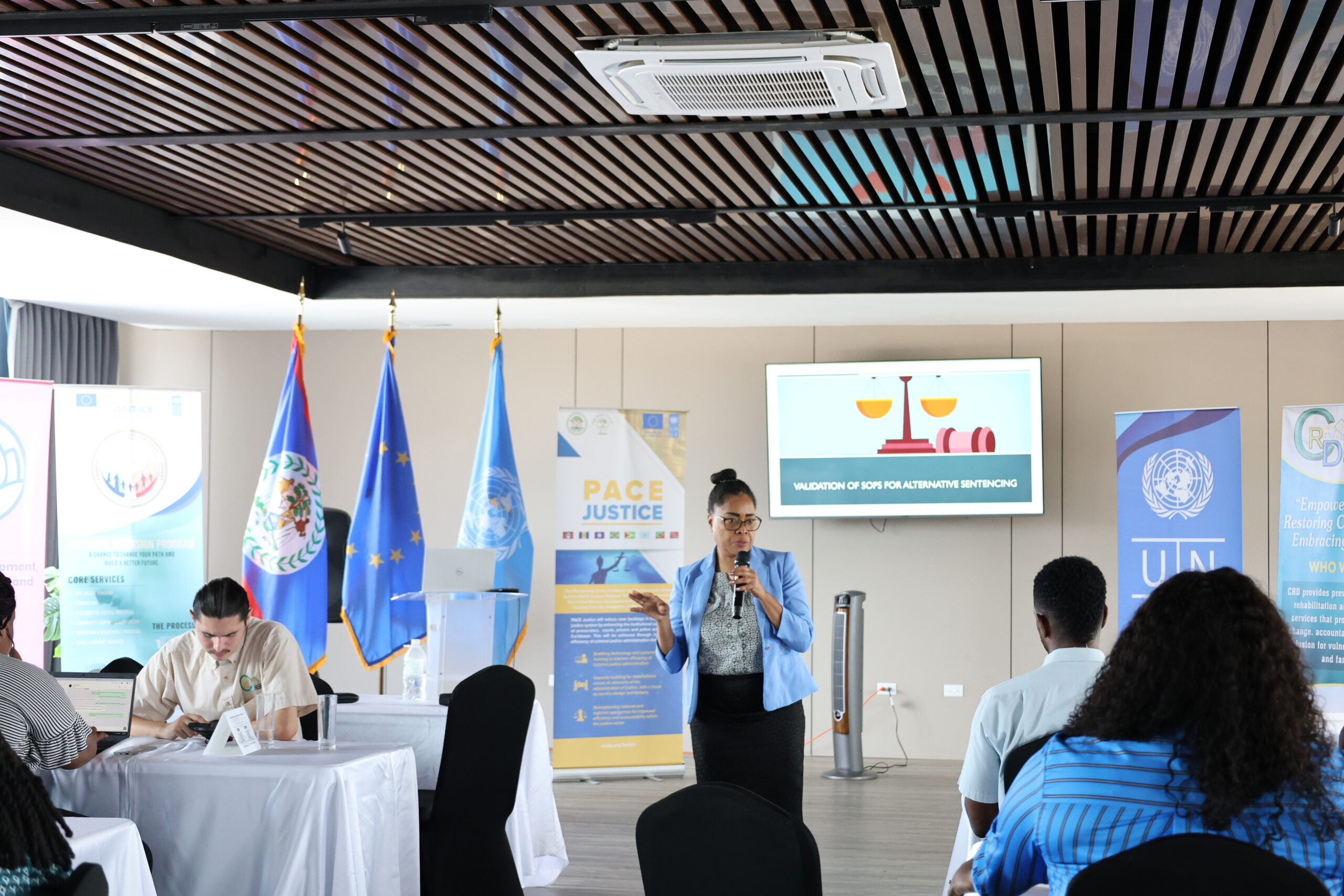
Today, the Community Rehabilitation Department (CRD) within the Ministry of Human Development, Family Support and Gender Affairs convened a staff validation workshop to review and strengthen a comprehensive set of Standard Operating Procedures (SOPs) that will guide the department’s work in prevention, rehabilitation, court services, aftercare, and programme management.
The workshop brought together CRD staff, representatives of the Ministry, technical experts, and development partners to ensure the procedures reflect best practices while responding to the realities faced by those working with children, youth, families, and communities across Belize.
The workshop was made possible through the support of the United Nations Development Programme (UNDP) under the PACE Justice Programme, funded by the European Union, which continues to partner with Belize in strengthening a more responsive and people-centered justice system. Delivering the keynote address, Ms. Amilin Mendez, Inclusive Growth, Digitization and Governance Team Lead at UNDP, emphasized that the validation exercise was about much more than finalizing a policy document.
“Today is not about a document. Today is about people. It is about the young person who makes one mistake but deserves a second chance instead of a lifetime of consequences. It is about families who need support before crises become tragedies, and communities becoming safer because we choose rehabilitation alongside accountability.”
She highlighted the importance of diversion as a key component of a modern justice system, explaining that it strengthens every stage of the justice chain by providing appropriate pathways for children and young people, supporting informed judicial decisions, and ensuring access to structured rehabilitation services that foster positive outcomes.
Mrs. Ganesha Smith, Acting Director of the Community Rehabilitation Department, welcomed participants and reaffirmed the Department’s commitment to strengthening systems that promote rehabilitation, accountability, and successful reintegration for young people in contact with the law.
The validation workshop marks another significant step in the Ministry’s ongoing efforts to build a coordinated, child-sensitive justice system that prioritizes prevention, rehabilitation, and opportunities for positive change. Once finalized, the Standard Operating Procedures will provide clear operational guidance for CRD staff nationwide, helping to ensure consistency, quality service delivery, and improved outcomes for children, youth, and families.
Ends