
Belmopan, July 1, 2026.
Belize strengthened its reputation as a regional leader in STEM education and innovation at the inaugural Caribbean SEED (STEM Engine for Economic Development) Summit 2026, where the country’s nationally recognized Robotics as a Sport initiative was presented as a practical model for preparing young people for the changing world of work while supporting long-term economic development.
Hosted by the Caribbean Science Foundation (CSF) in partnership with Barbados’ Ministry of Innovation, Industry, Science and Technology (MIIST) and FUTURE Barbados, the Summit convened researchers, educators, entrepreneurs, investors, government leaders, and policymakers from across the Caribbean and the international community to explore how science, technology, engineering, and mathematics can strengthen regional economies through innovation, entrepreneurship, and strategic investment.
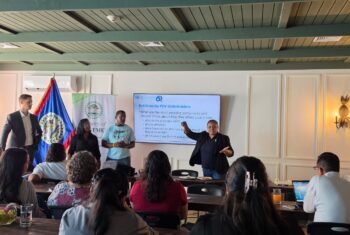
Belize was represented by Jamie Lee Usher, Vice Principal of Student Affairs at Saint Catherine Academy and President of the Belize Robotics Federation. Her presentation highlighted Belize’s historic distinction as the first country in the world to officially declare robotics a sport. Rather than treating robotics solely as a technology programme, Belize’s model applies the principles that make sport successful, including coaching, disciplined practice, teamwork, competition, resilience, and continuous improvement, to help students develop technical competence alongside leadership, communication, creativity, and problem-solving.
The presentation reflected many of the Summit’s central themes. Throughout the conference, internationally respected leaders including Prof. Cardinal Warde, Interim Executive Director of the Caribbean Science Foundation and Professor at the Massachusetts Institute of Technology; Dr. Dinah Sah, Co-Executive Director of the Caribbean Science Foundation; Dr. Didacus Jules, Director General of the Organization of Eastern Caribbean States; and Senator the Hon. Jonathan Reid, Barbados’ Minister of Innovation, Industry, Science and Technology, emphasized that the Caribbean’s future prosperity will depend upon stronger links between education, scientific research, entrepreneurship, investment, and public policy. Their message was consistent: countries that intentionally develop talent and innovation today will be better positioned to create the industries and jobs of tomorrow.
Beyond the formal presentation, Belize participated in strategic networking sessions examining STEM education, artificial intelligence, entrepreneurship, robotics, financing, and technology commercialization. Discussions highlighted the importance of modernizing curricula, strengthening teacher preparation in emerging technologies, removing barriers to student participation, and building stronger partnerships among governments, education systems, industry, and the Caribbean diaspora. The discussions reinforced a simple but powerful principle echoed throughout the Summit: developing skills is essential to building stronger economies because, ultimately, as Usher reminded, “skills pay the bills.”
Belize also invited Caribbean nations to consider robotics as a practical national strategy for expanding STEM participation, strengthening workforce development, and creating new opportunities for young people. The proposal generated significant discussion among educators, researchers, policymakers, and innovation leaders seeking practical approaches to educational reform and economic competitiveness.
Belize’s growing leadership in robotics reflects sustained collaboration among government, education, and national partners. Under the leadership of Prime Minister Hon. John Briceño, Belize became the first nation to formally recognize robotics as an official sport, establishing a policy that continues to receive international attention. Continued leadership from Chief Executive Officer Jose Urbina and the Ministry of E-Governance has strengthened the national robotics programme through digital innovation, strategic partnerships, and expanded opportunities for young people.
This national progress has also been supported by educational institutions committed to innovation. Under the leadership of Principal Dr. Salome Tillett, Saint Catherine Academy continues to demonstrate how schools can prepare students for leadership, service, and innovation by connecting classroom learning with authentic, real-world experiences.
Reflecting on the Summit, Usher noted that the Caribbean has the talent and creativity to compete globally, but lasting progress will depend on aligning education with national development. “Robotics as a sport demonstrates what is possible when education extends beyond the classroom. Students are challenged to think critically, solve real problems, work as teams, communicate effectively, and persevere through failure. These are not only the qualities of successful competitors. They are the qualities of the workforce and leadership the Caribbean will need in the years ahead.”
The Caribbean SEED Summit concluded with renewed commitments to regional collaboration in STEM education, scientific research, entrepreneurship, and innovation. Belize’s contribution demonstrated that small states can shape regional conversations by aligning national policy with educational leadership and a clear vision for developing the next generation of innovators.
Ends
For more information, please contact:
Mr. Salim Hoy
Content Management Officer
Tel: 828-4006
info@egov.gov.bz
Belmopan City, Belize