Belmopan, June 30, 2026.
Belize’s leadership in implementing natural capital approaches for almost two decades, along with its recent efforts to mainstream nature into policy, planning, and investment decisions, is being showcased at the 20th-anniversary edition of the Natural Capital Symposium at Stanford University in California, USA, from June 29 to July 1, 2026.
Building on its longstanding legacy of environmental stewardship, Belize continues to advance the integration of natural capital approaches in resource management, particularly within the country’s Blue Economy. Through the success of the Belize Blue Bonds debt conversion and other results-based financing initiatives, the country is now moving toward the establishment of what is expected to become the world’s first Monitoring, Reporting and Verification framework for a Blue Economy.
This work seeks to advance the use of natural capital approaches in developing and monitoring economic, environmental, and social key performance indicators, supported by a comprehensive MRV system. Through this effort, Belize is shifting beyond traditional environmental monitoring toward a more integrated system that accounts for the value of nature in policy, investment, and decision-making.
During the three-day event, Ms. Beverly Wade, Chief Executive Officer in the Ministry of Blue Economy and Marine Conservation, participated in panel discussions highlighting Belize’s progress in mainstreaming natural capital into planning, policy, finance, ecosystem stewardship, and decision-making. Ms. Wade showcased how Belize is using innovative ecosystem assessment tools, including the Natural Capital Alliance’s InVEST modelling software and tools, to support the achievement of Belize’s Blue Bond commitments. These include the National Integrated Coastal Zone Management Plan, approved in 2025, and Belize’s Marine Spatial Plan, known as the Belize Sustainable Ocean Plan, which is scheduled to be finalized and approved by November 4, 2026.
Ms. Safira Vasquez, Director of the Blue Bond and Finance Permanence Unit in the Office of the Prime Minister, also participated in a closed-door roundtable on Natural Capital in Investment Decisions. This high-level discussion brought together representatives from multilateral development banks, international financial institutions, ministries of finance, and strategic partners to explore practical approaches for integrating natural capital into policy, investment, financing, and economic decision-making.
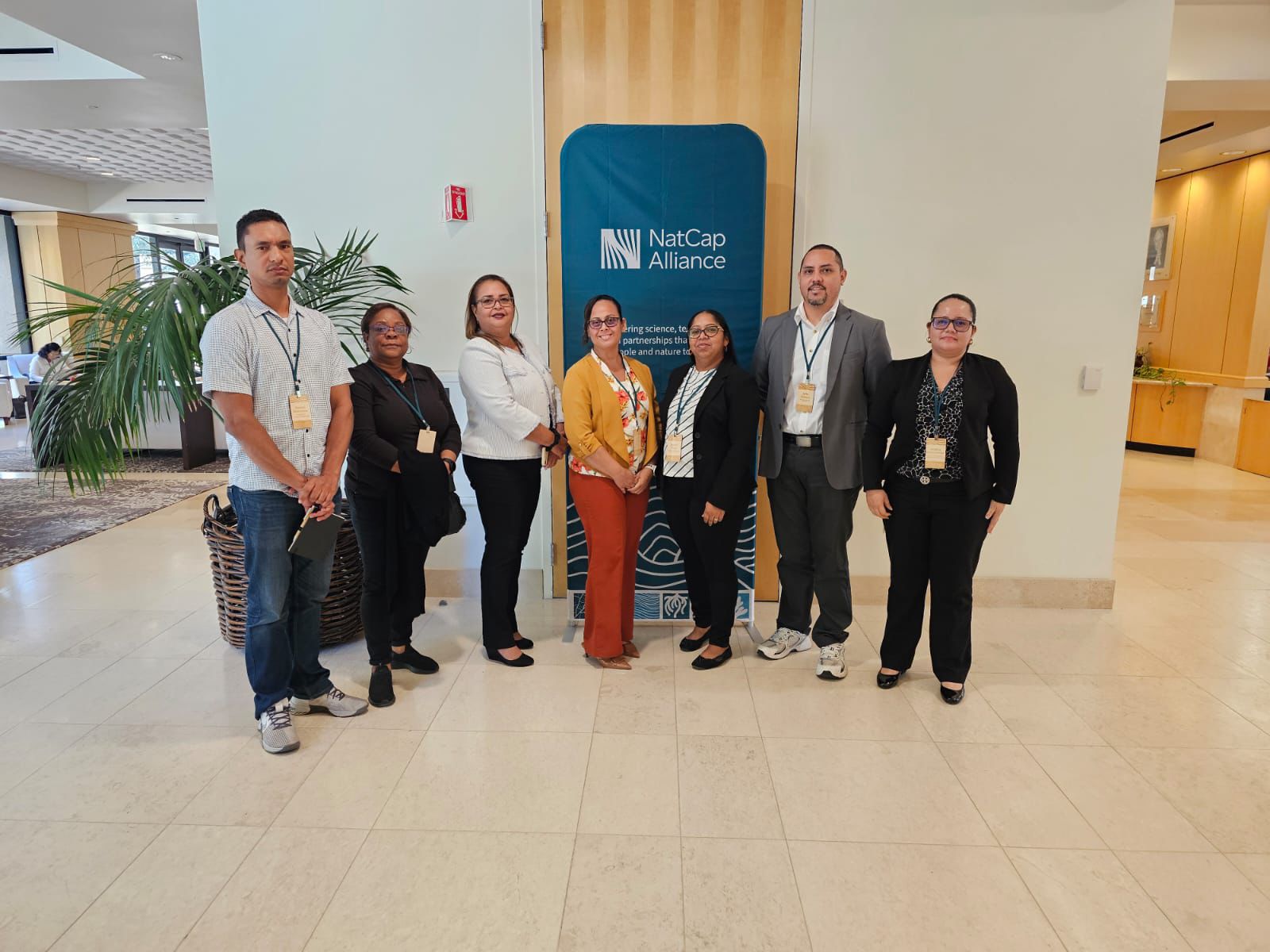
The Belize delegation to the Symposium also included Mrs. Arlene Young, Director of the Coastal Zone Management Authority and Institute; Mrs. Andria Grinage, Senior Blue Economy Officer in the Blue Economy Unit of the Ministry of Blue Economy and Marine Conservation; Mr. Jamani Balderamos, Technical Coordinator with the Blue Bond and Finance Permanence Unit; Mr. Jefte Ochaeta, Ocean Accounts Fellow at the Statistical Institute of Belize; and Ms. Nadia Bood, Belize Country Representative and Senior Program Officer, World Wildlife Fund.
Belize also participated in bilateral meetings to discuss the progress of the People, Planet and Prosperity Belize Project and opportunities to leverage this work for future results-based financing initiatives. These efforts are geared toward supporting the country’s macroeconomic targets while delivering conservation additionality and benefits for both people and nature.
The Belize delegation joined leaders from governments, multilateral organizations, the private sector, and civil society from 32 countries to discuss how natural capital approaches can be better incorporated into policy and investment decisions, while promoting the role of natural capital champions globally.
Throughout the Symposium, Belize was highlighted as a proof of concept, demonstrating how science, data, and decision-support tools can help institutions improve real-world outcomes for the economy, communities, and ecosystems.
Ends