Belmopan, October 6, 2026.
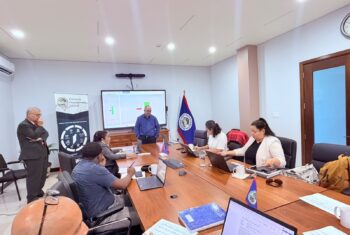
The Prime Minister, Hon. John Briceño, chaired an extraordinary meeting of the National Security Council on Monday, October 5, 2026, to discuss the incursion of a Guatemalan military reconnaissance aircraft into Belize’s airspace on September 24, 2026.
The meeting considered primary and secondary radar data that confirmed the unauthorised entry of a Guatemalan Armed Forces aircraft (tail number FAG706) during a regional counternarcotics operation that did not include Belize.
According to verifiable radar data, at 7:29 PM Belize time on September 24, 2026, FAG706 entered Belizean airspace from the east at an altitude of 4,000 feet. At 8:07 PM, the aircraft turned off its transponder to evade detection by secondary radar but was picked up at 8:10 PM by Belize’s primary radar. FAG706 then proceeded southwest, flew within close proximity of Punta Ycacos, Toledo, and departed Belizean airspace at approximately 8:40 PM Belize time. The aircraft was in Belizean airspace for approximately 1 hour and 10 minutes.
The Council directed the Ministry of Foreign Affairs and Foreign Trade to officially request the Organisation of American States (OAS) to investigate the incident, in addition to the Ministry’s earlier request to the OAS to seek clarification of the incident from Guatemala. Belize stands ready to fully cooperate with the OAS and to provide all available data for the organisation’s investigation of the incident.
The National Security Council also considered the wider context of regional counternarcotics efforts and reaffirmed Belize’s unwavering commitment to national and regional efforts with partner nations.
However, following multiple incursions by the Guatemalan Armed Forces in Belize’s southern maritime space and threats of the use of force on the Sarstoon in recent months, the Government of Belize rejects this most recent violation of Belize’s territorial sovereignty by the Guatemalan Armed Forces and calls on Guatemala to instead abide by the spirit of long-established bilateral confidence-building measures and in that way contribute to regional peace and stability required to confront multiple and evolving security threats, including drug trafficking.
Ends